Why Workforce Planning & Analytics Supports HR Strategy
Human resources has become increasingly important to business success. Organisations need capable people, the right skills, effective leadership, and a workforce structure that can adapt as priorities change. Yet HR strategy can become difficult to manage when decisions are based mainly on assumptions or outdated information. Businesses need a clearer understanding of their current workforce and what they may need in the future. This is where Workforce Planning & Analytics can provide valuable support.
By combining strategic workforce planning with relevant data, HR teams can make more informed decisions about recruitment, employee development, retention, succession, workforce costs, and future capabilities. Rather than responding to workforce problems only after they appear, organisations can use workforce insights to anticipate challenges and prepare appropriate solutions.
What Is Workforce Planning & Analytics?
Workforce Planning & Analytics combines workforce planning with the systematic use of workforce data. Workforce planning focuses on determining the people, roles, skills, and capabilities required to achieve organisational objectives. Analytics helps HR professionals understand workforce trends and use evidence to support decisions.
Relevant information may include employee numbers, turnover, vacancies, skills, recruitment activity, workforce costs, absence, training, performance, and internal movement.
When these elements are connected to business strategy, HR teams can develop a clearer picture of workforce priorities.
Why HR Strategy Needs Workforce Insight
An HR strategy should support the wider direction of an organisation. If a business plans to expand, introduce new technology, enter new markets, or change its operating model, workforce requirements may also change.
Without reliable workforce information, HR teams may struggle to determine whether they have the right number of employees or the appropriate capabilities.
Workforce Planning & Analytics can provide evidence that helps HR leaders connect people decisions with business priorities.
1. Connects HR With Business Goals
One of the strongest benefits of workforce planning is its ability to connect HR activity with organisational strategy.
Instead of focusing only on immediate vacancies, HR teams can consider the people and capabilities required to achieve future objectives. This makes HR more involved in strategic business discussions.
For example, a company planning significant growth may need additional employees, new leadership capabilities, or specialised technical skills. Workforce planning helps identify these requirements.
2. Identifies Skills Gaps
A strong HR strategy needs to understand what the workforce can do today and what it may need to do tomorrow.
Workforce Planning & Analytics can help organisations compare current skills with expected future requirements. This can reveal gaps in areas such as technology, leadership, data analysis, customer service, or specialist expertise.
Once a gap is identified, HR can consider recruitment, training, reskilling, or internal mobility.
3. Improves Recruitment Planning
Recruitment becomes more effective when it is based on clearly defined workforce needs.
Workforce analysis can help HR teams determine which roles are required, how many employees may be needed, and when recruitment should begin. This can reduce reactive hiring and improve coordination with hiring managers.
A strategic recruitment plan can also help organisations prepare talent pipelines before vacancies become urgent.
4. Supports Employee Retention
Keeping experienced employees is an important part of HR strategy.
High turnover can increase recruitment costs, disrupt teams, and result in the loss of valuable knowledge. Workforce analytics can help HR teams identify turnover patterns and areas that may require further investigation.
The data does not automatically explain why employees leave, but it can highlight where HR leaders should ask deeper questions and consider retention initiatives.
5. Strengthens Succession Planning
Organisations need to prepare for changes in important roles.
Employees may leave, retire, receive promotions, or move to other positions. Workforce Planning & Analytics can help HR teams identify critical roles and assess whether suitable internal talent is developing.
Where potential successors are not available, organisations can introduce development plans or consider external recruitment.
6. Supports Learning and Development
Training should ideally address genuine workforce needs.
Workforce data can reveal areas where employees require additional skills or where future capabilities need to be developed. HR teams can use these insights to create more targeted learning and development programmes.
This can make employee development more closely connected to organisational priorities.
7. Improves Workforce Cost Management
Employees represent a major organisational investment.
HR strategy needs to balance workforce capability with financial sustainability. Workforce planning can help leaders understand staffing levels, expected recruitment requirements, workforce costs, and potential changes.
Workforce Planning & Analytics can therefore support discussions between HR and finance when planning future workforce investments.
8. Supports Better Resource Allocation
Not every workforce issue requires the same response.
Some gaps may require recruitment, while others may be better addressed through training, technology, process improvements, or internal transfers. Workforce analysis can help organisations compare these options.
This allows HR resources to be directed toward areas where they can provide meaningful value.
9. Helps Prepare for Organisational Change
Change can affect roles, skills, reporting structures, and staffing requirements.
Whether an organisation is restructuring, adopting new technology, expanding operations, or changing its business model, workforce planning can help HR understand the people-related implications.
This can make change planning more organised and reduce the risk of unexpected capability gaps.
10. Improves Workforce Forecasting
HR strategy should consider future workforce requirements rather than focusing entirely on current conditions.
Organisations can use historical information and business expectations to create workforce forecasts. These forecasts may consider growth, turnover, retirement, new projects, and changes in business demand.
While forecasts cannot predict the future perfectly, they can help leaders prepare for different scenarios.
11. Supports Employee Mobility
Internal mobility can be an effective way to address workforce requirements.
Employees may already have transferable skills that could support different roles. Workforce information can help HR teams understand existing capabilities and identify opportunities for internal movement.
This can support career development while helping organisations use their existing talent more effectively.
12. Strengthens Workforce Diversity Planning
HR strategy can also benefit from responsible workforce data when considering diversity and inclusion.
Organisations can review workforce representation, recruitment patterns, progression, and development opportunities to identify areas that may need attention.
Data should be interpreted carefully and used to support fair processes rather than making assumptions about individual employees.
13. Provides Better HR Reporting
Effective HR strategy requires useful information.
Workforce Planning & Analytics can support reporting on workforce numbers, turnover, recruitment, skills, training, absence, and other relevant indicators. Automated or structured reporting can reduce the effort required to collect information manually.
Better reporting can help HR leaders communicate workforce priorities more clearly to senior management.
14. Supports Evidence-Based Decision-Making
Strategic decisions are stronger when they are supported by reliable evidence.
Instead of relying entirely on assumptions, HR leaders can use workforce data to understand trends and evaluate potential actions. This can make discussions about hiring, retention, development, and workforce costs more structured.
However, data should be treated as evidence rather than an automatic answer.
15. Encourages Proactive HR Management
A strategic HR function should ideally identify potential workforce issues before they become major problems.
Workforce Planning & Analytics supports this proactive approach by helping organisations monitor workforce trends and prepare for future needs.
This can allow HR teams to move beyond administration and contribute more actively to organisational planning.
Common Challenges
Implementing workforce planning and analytics can present challenges. Organisations may have inaccurate employee records, disconnected systems, inconsistent job titles, limited analytical skills, or unclear business forecasts.
Another challenge is relying too heavily on numbers without understanding the context behind them.
Addressing data quality, governance, technology, and analytical capability is therefore essential.

How to Integrate Workforce Planning Into HR Strategy
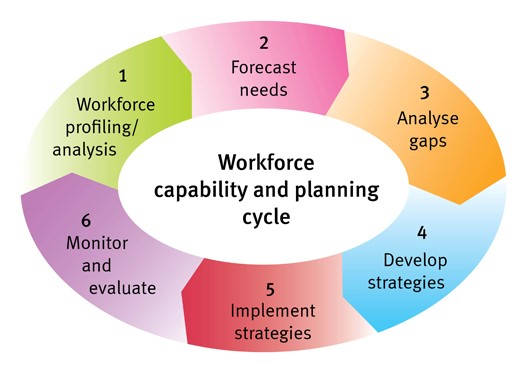
Begin by identifying the organisation’s strategic objectives. Consider how these objectives could affect workforce numbers, skills, roles, and capabilities.
Next, analyse the current workforce and compare it with expected future requirements. Identify gaps and determine whether they should be addressed through recruitment, development, retention, internal mobility, technology, or other solutions.
Finally, establish measurable workforce objectives and review them regularly. HR strategy should evolve as business conditions change.
Combining Data With Human Judgement
Analytics can identify patterns, but HR decisions often require a deeper understanding of people and organisational culture.
For example, a high turnover rate may indicate different issues depending on the department, role, management environment, or employee experience. HR professionals should investigate the context before deciding what action to take.
The strongest approach combines Workforce Planning & Analytics with professional judgement, employee feedback, and business knowledge.
Final Thoughts
Workforce Planning & Analytics can strengthen HR strategy by providing a clearer understanding of current workforce capabilities and future organisational requirements. It helps HR teams connect recruitment, development, retention, and workforce planning with broader business objectives.
The value of workforce analytics depends on accurate information and thoughtful interpretation. Organisations should regularly review their workforce data and update plans as priorities, technologies, and market conditions change.
Most importantly, workforce planning should not replace human judgement. Data can guide important questions, while HR professionals provide the context needed to make responsible decisions.
Ultimately, Workforce Planning & Analytics can help transform HR from a reactive function into a more proactive strategic partner. By combining reliable workforce information with clear business goals and human expertise, organisations can build stronger teams and prepare more effectively for future growth.