
Why Is 3M Orange Electrical Tape Useful for Clear Wire Marking?
Why Does Colour-Coded Tape Matter in Electrical Work?
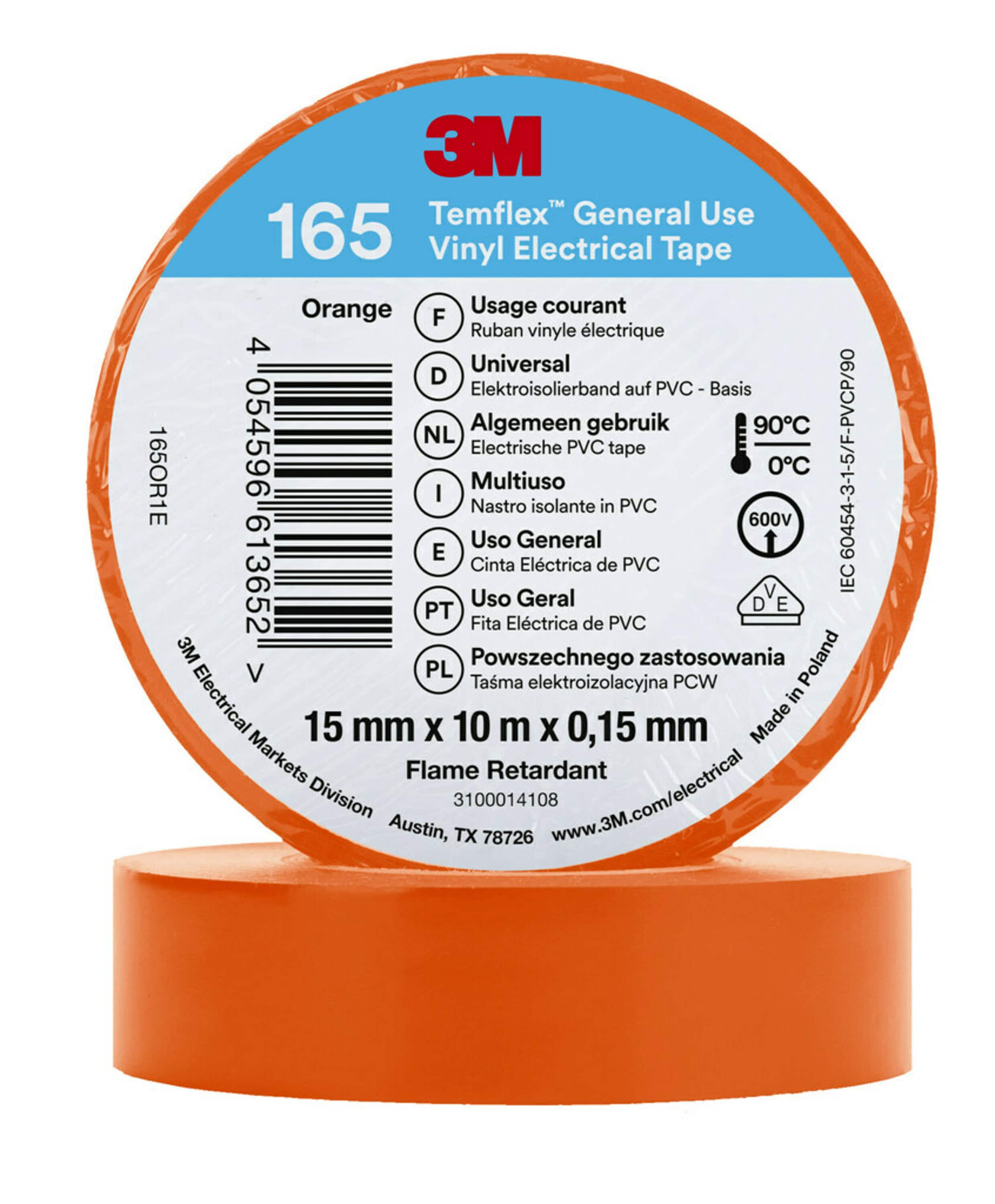
The 3M Orange Electrical Tape is a practical 3M Temflex 165 vinyl tape designed for everyday electrical insulation, cable marking and wire bundling tasks. Listed as a 15 mm x 10 m roll with a 0.152 mm thickness, it gives electricians, installers and maintenance teams a compact tape option for controlled, visible and tidy low-voltage work.
Orange tape is especially useful where visibility matters. In crowded panels, temporary repairs, service loops or cable groups, a bright colour can help technicians spot a marked section quickly. This supports faster inspection, clearer communication and more organised electrical maintenance.
What Makes This Tape Suitable for Routine Jobs?
This tape combines a flexible vinyl backing with a rubber-based adhesive. The backing helps it conform around wire insulation, cable jackets and small bends, while the adhesive supports clean contact on suitable surfaces. That makes it useful for general wrapping, identification bands and light-duty protective tasks.
The roll size is easy to carry in a toolkit, drawer or maintenance bag. Its 15 mm width is narrow enough for controlled wrapping around smaller cables, while still being wide enough for clear colour marking.
For buyers comparing different adhesive options, the wider Tapes category includes products for electrical, masking, hazard, sealing, surface protection and general workshop applications.
Where Can Orange Electrical Tape Be Applied?
3M Orange Electrical Tape can be used for wire identification, low-voltage insulation support, cable bundling, panel maintenance, appliance service work and general electrical repairs. It is also useful where a technician needs to temporarily flag a circuit, mark a completed test point or separate one cable group from another.
The tape should always be used within its stated limits and according to proper electrical practice. It should not be used to disguise serious cable damage, replace damaged insulation in critical installations or secure unsafe connections.
A neat wrap can improve presentation, but the underlying conductor, terminal, connector or cable must already be electrically and mechanically sound.
How Can It Improve Cable Identification?
Colour marking helps reduce confusion during maintenance. A single orange band can show a cable group, service priority, temporary status or internal workshop code. In larger electrical spaces, consistent tape colours can help teams identify circuits more quickly without needing to trace every wire from end to end.
Orange is useful because it stands out against many common cable jacket colours, including black, grey and white. This makes it practical for visible marking where labels may be too small, unavailable or unsuitable for the surface.
For work areas where colour is used for warning and visibility, products such as Hazard Tapes & Barrier Tapes may also support site safety, floor marking and restricted-area control.
Why Is Surface Preparation Important?
Electrical tape performs best when applied to a clean, dry and compatible surface. Dust, oil, moisture or loose insulation can reduce adhesion and cause the tape to lift after installation. Before wrapping, the cable should be inspected and cleaned where appropriate.
Stretch should also be controlled. Pulling the tape too tightly can cause it to shrink back or place stress on the wrapped area. Applying it too loosely may allow gaps, wrinkles or poor edge contact. A smooth, overlapping wrap gives the best finish for most everyday applications.
The end of the tape should be pressed firmly into place so it bonds properly and does not unwind during handling.
Can It Be Used in Electronics Workspaces?
Orange electrical tape can be useful around low-voltage wiring, test leads and service identification in electronics environments. However, ESD-sensitive areas need extra care because ordinary tapes may not be suitable for static-controlled procedures.
If a workspace handles sensitive components, ESD rules should guide the choice of materials. In those areas, ESD-Safe Tape may be more appropriate for packaging, handling or marking tasks where static control is required.
The key is to match the tape to the environment. A tape that works well for general maintenance may not be the right option for every electronics bench, clean area or production process.
How Does It Compare With Conductive Tape?
3M Orange Electrical Tape is intended for insulation, marking and general cable organisation. It is not selected for conductive shielding or grounding functions. That difference matters because some applications need electrical insulation, while others need controlled conductivity.
For shielding, grounding or EMI-related work, Copper Tapes may be considered where the design calls for conductive or specialised tape materials. These are very different from standard vinyl electrical tape and should be chosen according to electrical and mechanical requirements.
Using the wrong tape type can lead to poor performance, confusion during servicing or unexpected electrical behaviour.
What About Non-Electrical Marking Tasks?
Although orange electrical tape can help with quick identification, it is not always the best tape for every marking job. For painting, surface masking or temporary protection on non-electrical surfaces, Masking Tapes may be more suitable because they are designed around clean removal and edge control.
For threaded sealing, pipework and certain mechanical applications, PTFE Tapes are designed for a different purpose again. This is why tape selection should always start with the job: insulation, marking, sealing, masking or bonding.
A professional toolkit often includes several tape types because one roll cannot safely cover every application.
How Should This Tape Be Stored?
Storage affects tape performance. Rolls should be kept clean, dry and away from excessive heat, sunlight, dust and chemical exposure. Poor storage can dry the adhesive, deform the roll or make the tape harder to apply smoothly.
Before use, technicians should check that the tape unwinds cleanly and that the adhesive is still tacky. If the edges are dirty, the roll is distorted or the adhesive no longer holds properly, it should not be used for important electrical work.
Keeping colours separated and clearly visible also helps teams pick the right tape quickly during maintenance.
Is 3M Orange Electrical Tape a Good Choice?
3M Orange Electrical Tape is a useful choice for electricians, installers and maintenance teams that need a visible, flexible and easy-to-handle tape for everyday low-voltage insulation support and cable identification. Its orange colour improves recognition, while its vinyl backing and rubber-based adhesive make it practical for neat wrapping and general workshop use.
The best results come from correct application, clean surfaces, suitable storage and proper judgement about where tape is appropriate. When used as part of a safe wiring and maintenance process, 3M Temflex 165 orange tape can help keep electrical work clearer, neater and easier to manage.