
Understanding the Types of Bur in Modern Surgery and Dentistry
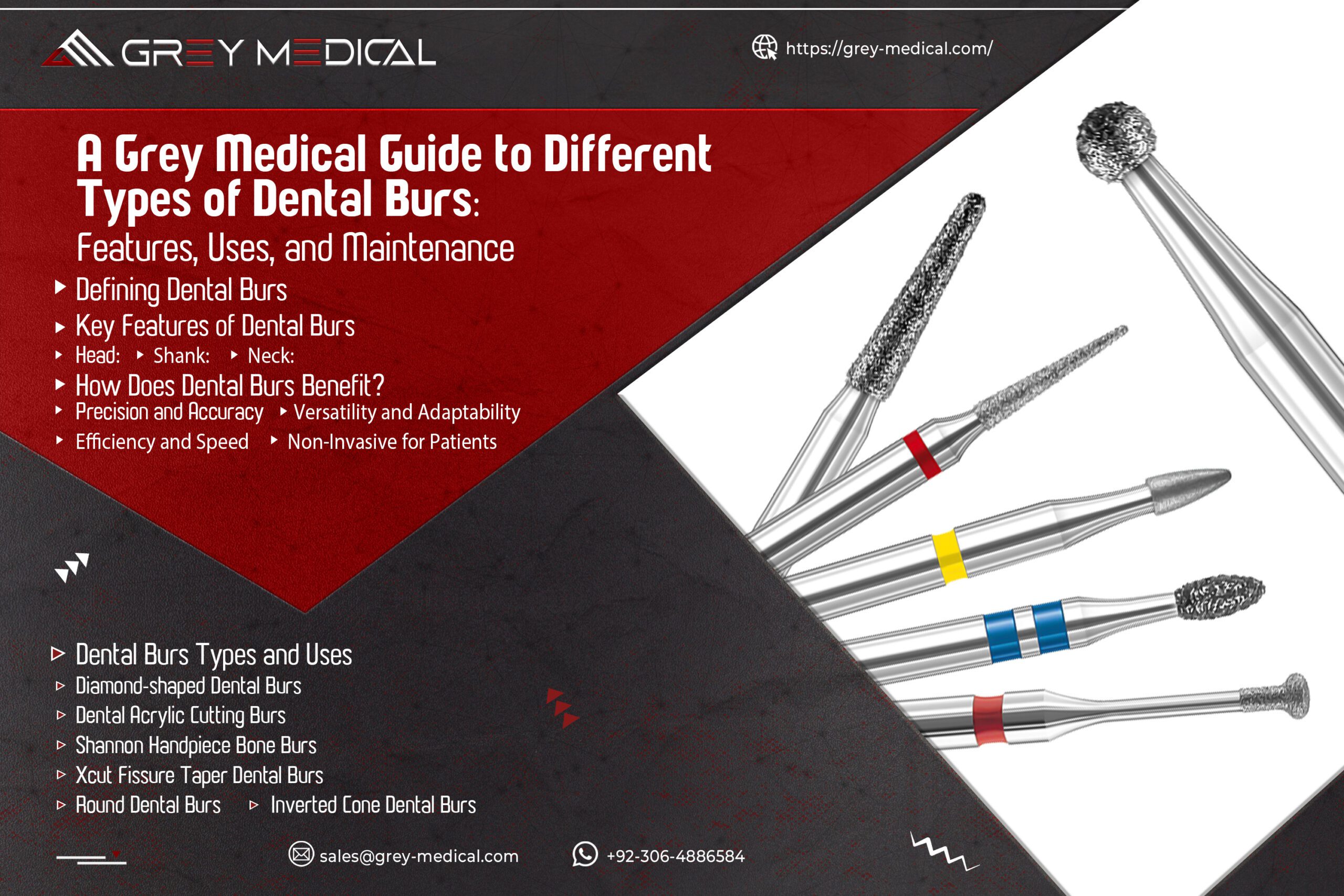
Grey Medical welcomes you to our comprehensive guide on surgical and dental rotary instruments. Surgical and dental procedures demand the highest level of accuracy, and selecting the correct instrument is paramount for patient safety and procedural success. Surgeons and dental practitioners rely on various rotational tools to cut, shape, notch, and smooth bone or tissue efficiently. Understanding the available types of bur allows medical professionals to choose the optimal instrument tailored to specific anatomical structures and clinical requirements.
Dental Rotary Cutting Instruments
In restorative and pediatric dentistry, clinicians frequently utilize specialized instruments designed to remove decayed enamel and shape tooth structures precisely. Among the essential types of bur, friction-grip and latch-type designs stand out as standard options for high-speed and low-speed handpieces. These instruments feature distinct head shapes, such as round, inverted cone, and straight fissure patterns, allowing dentists to perform intricate cavity preparations, create retentive grooves, and contour restoration materials safely.
Diamond Surgical Rotary Tools
When dealing with extremely hard tissue or pediatric bone structures, diamond-coated rotary instruments offer exceptional efficiency and control. These specialized types of bur utilize synthetic diamond particles bonded to a stainless steel shank, enabling rapid, smooth ablation with reduced thermal friction. Surgeons prefer diamond heads during neurosurgical, orthopedic, and ENT procedures where delicate bone removal near critical nerves or blood vessels demands minimal vibration and maximal tactile feedback.
Carbide Cutting and Carving Instruments
Tungsten carbide instruments are widely celebrated across operating rooms for their remarkable strength and long-lasting sharpness. As one of the most versatile types of bur, carbide instruments excel at aggressive bone resection, sectioning impacted tweezers with teeth, and removing old surgical hardware. The sharp flutes engineered on carbide heads shear through dense tissue rather than grinding it, producing clean cuts while reducing operating time and heat generation.
Specialized Surgical and Orthopedic Flute Designs
Orthopedic and maxillo-facial surgeons require specialized flutes customized for precise surgical entry and bone contouring. Evaluating different types of bur based on flute count and geometry reveals that coarse flutes rapidly evacuate bone debris, whereas fine-fluted finishing instruments leave an ultra-smooth bone surface ready for hardware attachment. Grey Medical manufactures these precision surgical instruments to adhere strictly to international safety standards, ensuring smooth operation under high torque.
Maintenance and Sterilization Requirements
Proper care and decontamination of rotary surgical instruments are vital to maintain cutting efficiency and extend instrument lifespan. Medical staff must thoroughly clean, inspect, and autoclave surgical fluted heads after every clinical procedure. Neglecting maintenance leads to dulled edges, increased heat production during bone cutting, and potential micro-fractures, which compromise surgical outcomes and increase risk to the patient.
Conclusion
Selecting the appropriate rotary instrument is fundamental to achieving superior clinical outcomes across all surgical and dental disciplines. Grey Medical remains committed to supplying healthcare professionals worldwide with precision-crafted, high-grade stainless steel and tungsten carbide surgical tools. By maintaining strict quality control and offering versatile instrument options, Grey Medical continues to support surgeons in delivering safe, accurate, and efficient patient care.