
How Does Column Chromatography (Flash Chromatography) Enable Efficient Compound Purification?
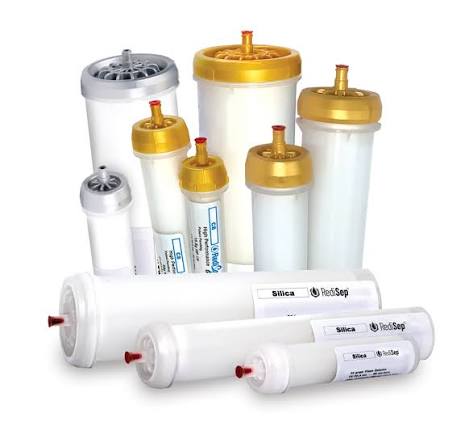
Exploring Separation Principles, Solvent Selection and Advanced Purification Strategies in Chemical Research
Obtaining a pure compound after a chemical reaction is one of the most important challenges in synthetic chemistry. Reaction mixtures often contain several components, including unreacted starting materials, side products and impurities that must be removed before further study. Column Chromatography (Flash Chromatography) provides researchers with an effective purification approach by separating compounds according to their different interactions with stationary and mobile phases.
Used widely in organic synthesis, medicinal chemistry and research laboratories, flash chromatography offers a practical method for isolating target compounds while improving workflow efficiency compared with traditional purification approaches.
What Is Column Chromatography?
Column chromatography is a separation technique where a mixture is passed through a column containing a solid stationary phase. A liquid solvent moves through the column and carries the sample components at different rates.
Each compound interacts differently with the stationary material. Molecules that bind strongly remain in the column longer, while compounds with weaker interactions travel more quickly.
This difference in movement allows individual components to separate and be collected independently.
Flash chromatography follows the same basic principle but uses controlled solvent flow, often with pressure assistance, to accelerate separation and improve purification speed.
Why Is Purification Necessary After Chemical Synthesis?
Most synthetic reactions do not produce only one compound. Even when a reaction is successful, the resulting mixture may contain:
- Excess reagents
- Starting materials
- Reaction by-products
- Catalyst residues
- Structural impurities
Without proper purification, these substances can affect compound characterisation, biological testing or further synthetic steps.
An efficient purification process helps researchers obtain cleaner materials that are suitable for:
- Structural analysis
- Biological evaluation
- Further chemical modification
- Research applications
- Quality assessment
Column chromatography remains popular because it can handle many different compound classes and sample sizes.
How Does Flash Chromatography Improve Laboratory Purification?
Traditional gravity column chromatography can require long separation times because solvent movement depends mainly on gravity.
Flash chromatography improves this process by increasing solvent flow through the stationary phase. This allows compounds to move through the column faster while maintaining useful separation.
The technique provides advantages such as:
- Reduced purification time
- Improved sample processing capacity
- Better workflow organisation
- Flexible method adjustment
- Efficient compound recovery
Researchers can modify the purification conditions by changing column size, solvent composition, flow rate and stationary-phase quantity.
What Is Preparative Chromatography?
When larger amounts of purified material are required, researchers often use techniques designed specifically for compound isolation.
Preparative Chromatography focuses on separating and collecting compounds at a scale suitable for further research rather than only analytical identification.
Flash chromatography is commonly considered a preparative approach because the objective is usually to recover a useful quantity of purified compound.
The choice between analytical and preparative chromatography depends on whether the goal is identification, monitoring or actual isolation of material.
How Does the Stationary Phase Affect Separation?
The stationary phase determines how compounds interact during purification.
Silica-based materials are frequently used because they provide predictable interactions with many organic molecules. However, different compounds may require different stationary-phase properties to achieve effective separation.
Factors influencing stationary-phase performance include:
- Particle size
- Surface chemistry
- Loading capacity
- Compound polarity
- Sample complexity
A compound that separates well under one stationary-phase condition may show poor resolution under another.
This is why purification methods are often tested and adjusted before processing valuable samples.
Why Is Solvent Selection Critical?
The solvent system controls how quickly compounds move through the column.
A weak solvent system may cause compounds to remain strongly attached to the stationary phase, resulting in slow separation. A very strong solvent system may move compounds too quickly, causing overlapping fractions.
Researchers typically optimise solvent conditions by evaluating compound behaviour before performing a large-scale purification.
Solvents For Chromatographic Applications support chromatography workflows where solvent compatibility and quality are important factors.
The selected solvent should provide suitable separation while remaining compatible with the compound stability and purification objectives.
How Can Chromatography Accessories Improve Workflow Control?
Successful purification requires more than selecting a column and solvent. Supporting equipment also contributes to consistency and ease of operation.
Chromatography Accessories can support laboratory workflows involving sample preparation, separation handling and collection processes.
Appropriate accessories help researchers maintain organised procedures and reduce unnecessary variation between purification runs.
In research environments where many compounds are processed, consistent equipment setup can improve efficiency and make purification results easier to reproduce.
Monitoring Purification Progress
Knowing when a target compound has separated is essential for efficient fraction collection.
Researchers often monitor collected fractions using analytical techniques to determine which samples contain the desired compound.
Standards For Chromatography can support comparison and identification workflows by providing reference materials with known characteristics.
Reference comparison can help researchers evaluate whether collected fractions contain expected compounds and whether additional purification may be required.
Common Challenges During Flash Chromatography
Although flash chromatography is highly useful, several factors can influence purification quality.
Poor Separation
This may occur when compounds have very similar chemical properties or when the solvent system does not provide enough selectivity.
Column Overloading
Introducing too much sample can reduce separation efficiency and create overlapping bands.
Incorrect Solvent Conditions
A solvent system that is too strong or too weak can reduce resolution.
Sample Loss
Some compounds may remain strongly attached to the stationary phase or degrade during purification.
Careful optimisation helps reduce these issues and improves recovery.
How Can Researchers Improve Flash Chromatography Results?
A successful purification strategy begins before the sample reaches the column.
Researchers can improve results by:
- Testing solvent systems before purification
- Selecting appropriate stationary phases
- Loading suitable sample quantities
- Maintaining consistent flow conditions
- Collecting fractions systematically
- Analysing fractions before combining them
Small-scale optimisation can prevent unnecessary solvent use and reduce the risk of losing valuable compounds.
Combining Purification With Modern Analytical Methods
Column chromatography is often one part of a complete chemical research workflow.
After purification, researchers may use analytical methods to confirm compound identity and quality. Chromatographic analysis, spectroscopy and other techniques can provide additional information about the final product.
The relationship between purification and analysis is important because a compound that appears separated visually may still require further confirmation before being used in advanced research.
The Importance of Efficient Purification in Research
Fast and reliable purification allows researchers to progress more efficiently from chemical synthesis to compound evaluation.
Whether developing new molecules, studying reaction pathways or preparing materials for testing, flash chromatography provides a flexible approach for isolating target compounds.
By carefully selecting stationary phases, optimising solvent systems and combining purification with analytical verification, laboratories can improve compound quality and create more dependable synthetic workflows.
Conclusion
Column chromatography and flash chromatography remain essential purification techniques in modern chemistry. Their ability to separate complex mixtures makes them valuable across organic synthesis, pharmaceutical research and chemical development.
A successful purification process depends on understanding compound behaviour, selecting suitable chromatography materials and maintaining controlled laboratory conditions. When properly optimised, flash chromatography provides researchers with an efficient route to obtain cleaner compounds and support reliable scientific discovery.